
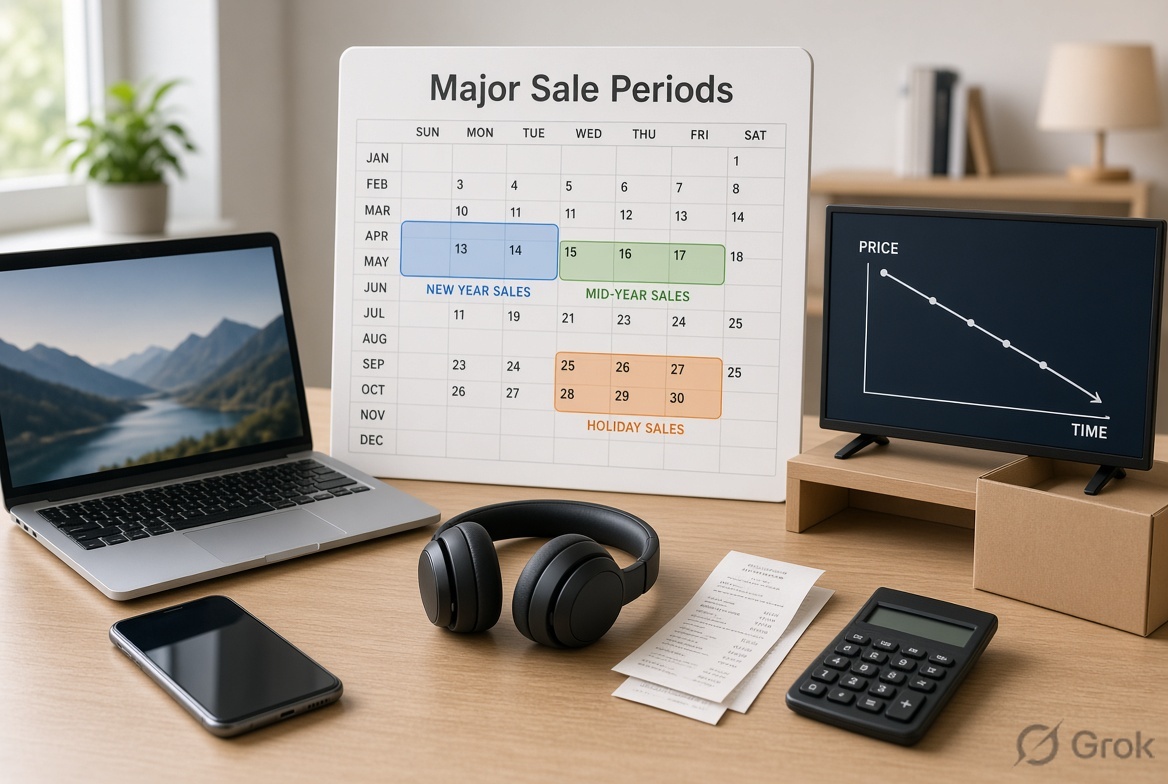
My brother-in-law bought a 65-inch 4K TV in September. Two months later, Black Friday happened and the same TV was $280 cheaper at the same store. He was livid. I tried to tell him to just ask for a price adjustment but they’d already changed the model number (a classic retail trick, by the way).
When Is the Best Time to Buy Electronics?
If you’re buying electronics — TV, laptop, phone, camera, whatever — timing genuinely matters. The difference between buying at the wrong time and the right time can be hundreds of dollars on a single purchase. Here’s the breakdown that nobody bothers to give you in one place.
Black Friday and Cyber Monday: Still the Best Overall
I know, I know. It’s the obvious answer. But it’s obvious because it’s true.
Black Friday (the day after Thanksgiving) and Cyber Monday (the following Monday) still represent the single biggest window of genuine electronics deals in the year. Retailers are competing hard for your money, the discounts on major electronics are real, and the sale window has expanded well beyond just those two days — most major sales now run for a full week or two on either side.
What goes on sale: TVs, laptops, headphones, smart home devices, gaming consoles, tablets. Basically everything.
The catch: inventory on the best deals sells out fast. For in-demand items, you need to be watching prices leading up to Black Friday and be ready to buy when the deal goes live, not the next morning.
Pro tip: Use a tool like CamelCamelCamel (tracks Amazon price history) or Honey to see whether a “Black Friday deal” is actually a meaningful discount or whether the price has been inflated before being “discounted.” Retailers do artificially raise prices before marking them down, and it’s more common than it should be.
January: Post-Holiday Clearance Is Underrated
Everyone rushes to buy during the holidays. Not enough people take advantage of what happens immediately after.
January is when retailers need to clear out old inventory to make room for new stuff. TVs in particular get heavily discounted in January because brands debut their new models at CES (Consumer Electronics Show, usually first or second week of January) and retailers need to move last year’s models.
If you don’t need the absolute latest TV specs, buying a current-generation TV in January instead of December can save you a significant amount. The TV isn’t worse — it’s just last year’s model. Which is still excellent.
This pattern also applies to laptops (new models tend to launch in spring) and other gadgets where manufacturers refresh annually.
Back to School Season: August-September for Laptops and Tablets
If you need a laptop or a tablet, late July through early September is your window. Retailers run extended back-to-school promotions, and the deals on laptops specifically can be very competitive.
Best Buy, Apple, Microsoft, Dell, HP — all of them run back-to-school events with either straight discounts or bundled freebies (free AirPods with a MacBook was a classic Apple promotion for years). Amazon and Walmart get aggressive too.
Student discount programs also kick in hard during this period. Apple’s education pricing is available year-round but the freebies get better in back-to-school season. Same with Microsoft and their student offers.
Even if you’re not a student, a lot of these sales don’t actually verify student status.
New iPhone/Android Drop Season: September-October
Every September (or thereabouts), Apple announces new iPhones. Every Android manufacturer has their own release cadence but many drop flagships in early spring or fall.
The best time to buy the previous flagship phone is immediately after the new one drops. The second Apple announces the iPhone 16, prices on iPhone 15 models drop noticeably — at Apple, at carriers, and especially at third-party retailers.
If you don’t need to be on the cutting edge, this is the play. You get a phone that was $1,100 last year for $700-$800 the week the new model launches. The technology gap between two consecutive generations of any major phone is genuinely minimal for most people.
Prime Day and Amazon’s Other Sales Events: July (and Increasingly October)
Amazon Prime Day started as one July event and has expanded into two annual events — one in July and one in October (sometimes called Prime Big Deal Days or similar names).
Electronics deals during Prime Day are real, though the best ones sell out fast and require a Prime membership. The competition effect is worth noting: other retailers (Walmart, Best Buy, Target) tend to run competing sales during the same window, so you don’t necessarily have to buy through Amazon to benefit from Prime Day pricing pressure.
Smart home devices — Amazon Echo, Ring, Blink cameras — are almost always at their lowest prices ever during Prime Day events because Amazon is selling their own hardware.
When NOT to Buy Electronics
The week something launches. New tech is almost always at its most expensive on launch day. Phones, consoles, graphics cards — wait even three to six months and prices drop as competition arrives, inventory stabilizes, and the hype fades. The exception is when something sells out and prices actually spike on the secondhand market (rare but it happens with gaming consoles).
Right before major holidays (except for gifts). The week before Christmas, prices on popular items go up or at least stay at full retail because retailers know people are desperate. If you need something as a gift, buy it in November, not December 20th.
February through April without a specific deal. There’s no major sale event driving competition. Prices just sit at regular retail. If you can wait, wait.
Tax refund season (late February through March). This sounds counterintuitive, but retailers know that people have extra cash when refunds hit, and they’re less aggressive with discounts. You might actually see prices firm up slightly.
The Tools That Actually Help
Camel: Free. Tracks Amazon price history for any product. Before you buy anything on Amazon, paste the URL in here and see the price history chart. If the current price is a 52-week high, wait. If it’s at or near a 52-week low, it might be a good time.
Honey: Checks for coupon codes automatically. Also has a “Price History” feature and can alert you when a price drops.
Google Shopping: If you’re not attached to a specific retailer, search for the product on Google and click “Shopping” to compare prices across multiple stores at once.
Slickdeals / r/buildapcsales: Community-driven deal aggregators where real people post the best deals as they go live. Especially good for PC components and anything in the gaming/computing space.
A
General Rules That Work Year-Round
Check price history before you buy anything over $100. Five minutes on CamelCamelCamel has saved me from buying things that were “on sale” but actually marked up.
Buy display models. Best Buy and other physical retailers sell their floor display models at a discount when they update the floor. These items have been used, but they were used in a climate-controlled store under low stress. For TVs especially, the discount can be substantial.
Ask for price match. Most major retailers (Best Buy, Target, Walmart, Costco) will match a competitor’s price if you ask. Keep receipts and check competitor prices on big purchases. Even within the same retailer, many have price adjustment policies for 14-30 days after purchase.
Buy refurbished from the manufacturer. Apple Certified Refurbished, Samsung Certified Pre-Owned, Best Buy Geek Squad Certified — these come with warranties and are tested to meet original specs. Discounts are usually 15-30% off retail.
The bottom line: knowing the calendar and a couple of free price-tracking tools is genuinely worth a few hours of your attention. On a $1,000 purchase, a 20% timing advantage is $200 back in your pocket for essentially zero extra effort.
Also Read: How Can I Find the Best Online Deals?
Conclusion
In conclusion, the best time to buy electronics is usually during major sales, festive seasons, and when newer models are released. By comparing prices, checking discounts, and researching the product beforehand, you can get better value for your money.
When is the best time to buy electronics?
The best time is usually during major sales, festive seasons, and special promotional events when discounts are common.
Are electronics cheaper during festive sales?
Yes, many retailers offer significant discounts, bank offers, and cashback during festive sales.
Is it better to buy electronics when a new model launches?
Often, yes. Older models may become cheaper when a newer version is released.
Which time of year has the best electronics deals?
Major sale periods, such as festive and year-end sales, often provide good opportunities to save money.
Should I wait for a sale before buying electronics?
If your purchase is not urgent, waiting for a major sale can help you find a better price.