
Making a budget sounds easy until you actually sit down to do it.
You open a spreadsheet, start making categories, and suddenly you’re thinking, Why do I need 17 different columns just to figure out where my money went?
What Is the Best Free Budgeting App?
That is probably why so many people quit budgeting after a few days.
The good news is that your first budget doesn’t need to be perfect. It doesn’t even need to look impressive. You just need something simple enough that you will actually use it.
So let’s start from the beginning.
First, Find Out How Much Money You Actually Get
Before thinking about rent, groceries, savings or anything else, figure out how much money you actually have coming in each month.
Use your take-home income, not your salary before taxes and deductions.
For example, if your job says you earn $3,500 a month but only $2,900 reaches your bank account, your budget should be based on $2,900.
Check your recent paychecks or bank deposits and write down the amount.
If your income changes every month, things get a little different. Maybe you’re freelancing, doing contract work, or your hours aren’t always the same.
In that case, look at the last three to six months and work out an average. I’d also avoid using your biggest month as your expected income. That’s just asking for trouble.
Use a number that feels realistic.
Now Look at Where Your Money Is Going
This is probably the part nobody enjoys.
Go through your bank and credit card statements from the last month or two. Look at the actual transactions instead of trying to remember what you spent.
Because honestly, most of us aren’t very good at remembering small purchases.
A $6 coffee doesn’t feel like much.
Neither does a $15 delivery order.
But when you do that several times a week, suddenly there’s a pretty big number sitting there.
Start by putting your spending into a few basic groups.
Things You Need to Pay
These are usually expenses that don’t disappear just because you’re trying to save money.
- Rent or mortgage
- Electricity and other utilities
- Insurance
- Car payments
- Minimum loan payments
- Phone bill
- Basic groceries
Things You Need, But Which Change
These aren’t always exactly the same every month.
- Gas
- Groceries
- Medicine
- Electricity
- Household items
Things You Want
This is the fun category.
- Restaurants
- Shopping
- Movies and entertainment
- Hobbies
- Coffee
- Subscriptions
Don’t feel guilty about this category. You are allowed to spend money on things you enjoy.
The point of a budget isn’t to make your life miserable.
Do One Simple Calculation
Now take your monthly income and subtract your monthly spending.
That’s it.
If you earn $3,000 and spend $2,500, you have $500 left.
That’s a good starting point.
If you’re spending $3,200 while earning $3,000, though, you’ve got a problem that needs attention. You may be using savings, credit cards or borrowing money to cover the difference.
And don’t panic if that’s your situation.
The point of making a budget is to discover the problem. You can’t fix something you haven’t actually looked at.
Give Your Money a Job
This is the part that turns a list of expenses into an actual budget.
Instead of waiting until the end of the month to see what’s left, decide beforehand what your money is supposed to do.
One popular starting point is the 50/30/20 rule.
Roughly:
- 50% → needs
- 30% → wants
- 20% → savings and extra debt payments
So, if your take-home income is $3,000:
$1,500 could go toward needs.
$900 could go toward wants.
$600 could go toward savings or paying down debt.
But don’t treat those percentages like some kind of financial law.
If your rent is expensive, you might need more than 50% for necessities. If you’re aggressively paying off debt, you might put more than 20% toward debt.
That’s completely fine.
The rule is simply a starting point.
Pick a Tracking System You Won’t Hate
A budget isn’t useful if you make it once and then forget about it.
You need some way to keep an eye on your spending.
There are a few easy options.
Cash Envelopes
This is the old-fashioned approach.
You decide how much you’re willing to spend on things like eating out, entertainment or shopping and keep that amount in separate envelopes.
Once the money is gone, you’re done.
It’s simple, and for some people, seeing physical cash disappear makes spending feel much more real.
Spreadsheet
You don’t need some giant financial spreadsheet.
A basic Google Sheet is enough.
You could have three columns:
Category | Planned | Actual
That’s basically it.
Update it every few days or once a week.
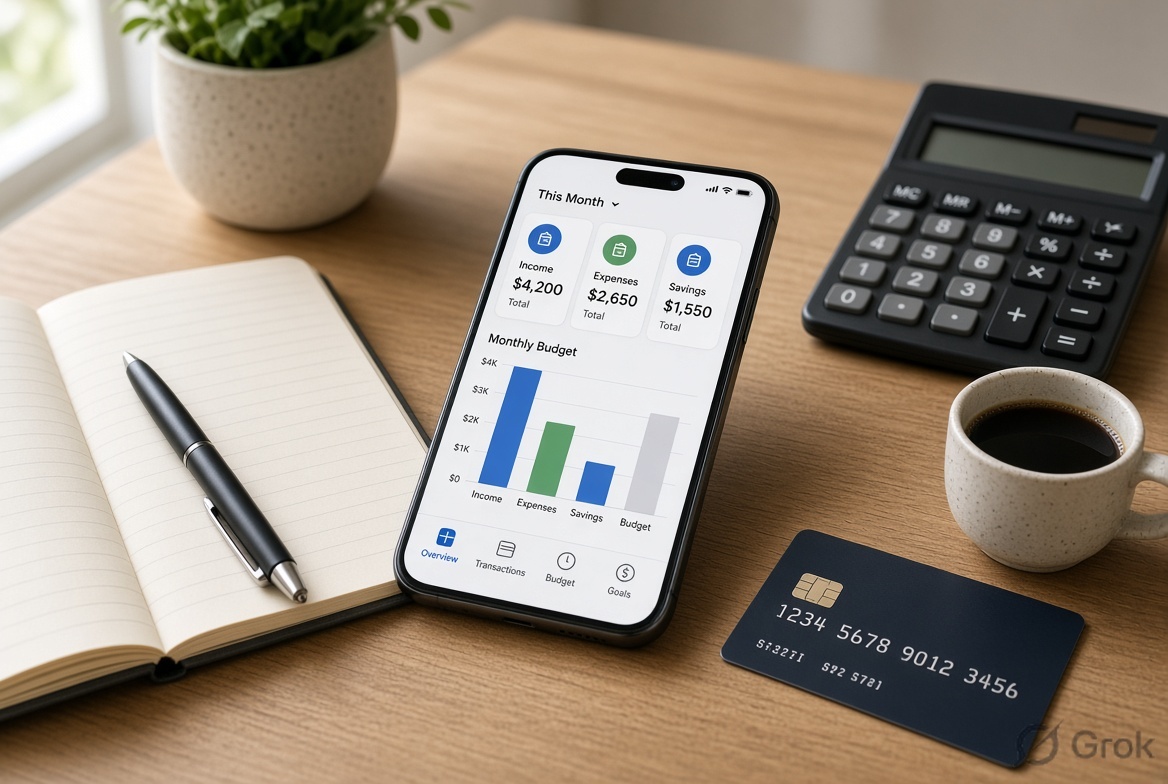
Budgeting App
If manually entering every purchase sounds annoying, a budgeting app can make things easier.
Some apps can connect with financial accounts and categorize transactions automatically.
Just don’t spend two hours choosing an app and then never actually check it.
The tool isn’t the important part.
Using it is.
Check Your Budget Once a Month
At the end of the month, spend about 20 minutes looking at what actually happened.
Compare your plan with reality.
Maybe groceries cost more than you expected.
Maybe you barely spent anything on entertainment.
Maybe you completely forgot about a subscription.
Maybe your income was lower than expected.
That’s useful information.
Ask yourself:
- Where did I spend more than planned?
- Where did I spend less?
- Did anything unexpected come up?
- Is my income changing?
- What should I change next month?
Don’t look at this like a school test where you got a bad grade.
The budget isn’t failing.
It’s giving you information.
Don’t Forget Those Annoying Once-in-a-While Expenses
This is one of the easiest things to forget when you’re new to budgeting.
Some expenses don’t happen every month, but you know they’re coming eventually.
Car registration.
Annual subscriptions.
Holiday gifts.
School expenses.
Home repairs.
Instead of being surprised when they arrive, estimate how much you’ll need for the year.
For example, if you expect $1,200 of irregular expenses over the year, that’s about $100 per month.
Set that money aside.
Then when the expense arrives, it doesn’t completely destroy your monthly budget.
Don’t Make Your Budget Unrealistic
Here’s a mistake beginners make all the time.
They decide they’re going to completely change their spending overnight.
Maybe they’ve been spending $400 a month on restaurants, so they put $50 in the budget.
Sounds good on paper.
Probably won’t work.
If you normally spend $400, suddenly limiting yourself to $50 is a massive change.
Try $300 first.
Then maybe $250.
Make the change gradually.
A realistic budget that you follow is much better than a perfect budget that lasts five days.
Leave Some Money for Fun
This sounds unimportant, but it isn’t.
If your budget says you can never order food, never buy something you like and never go out with friends, you’re probably going to get tired of it.
Then one day you’ll overspend and think, Forget this budget.
Give yourself some spending money.
It doesn’t have to be a huge amount.
Even $50 or $100 that you can spend without feeling guilty can make the whole system easier to live with.
A Simple Beginner Budget
Let’s say someone brings home $3,500 each month.
Their first budget could look something like this:
| Category | Monthly Amount |
|---|---|
| Rent | $1,000 |
| Utilities | $150 |
| Groceries | $350 |
| Transportation | $200 |
| Insurance | $150 |
| Needs | $1,850 |
| Dining out | $200 |
| Entertainment | $100 |
| Shopping | $150 |
| Subscriptions | $50 |
| Wants | $500 |
| Emergency savings | $400 |
| Extra debt payment | $300 |
| Savings goal | $300 |
| Irregular expenses | $150 |
| Total | $3,200 |
Notice something important here.
There is still $300 left over.
That’s not a mistake. You don’t have to force every last dollar into a category just because someone told you that a budget has to hit exactly zero.
You could add that $300 to savings, put it toward debt, keep some as a buffer, or divide it between those goals.
The right choice depends on your situation.
Your First Budget Will Probably Be Wrong
And that’s normal.
Your first attempt is basically a guess based on what you currently know.
After one month, you’ll have better information.
After three months, you’ll probably understand your spending patterns much better.
Maybe you discover you spend more on groceries than expected.
Maybe your utility bill changes seasonally.
Maybe you underestimated how much you spend on transportation.
Change the numbers.
That’s what a budget is for.
You aren’t creating a contract that you can never change.
You’re creating a plan and then improving that plan as you learn more.
Also Read: How Do I Create a Budget for Beginners?
Start Small
You don’t need a complicated spreadsheet tonight.
You don’t need to read ten finance books.
You don’t need the perfect budgeting app.
Start with four things:
How much comes in?
How much goes out?
Where is most of it going?
What do you want your money to do instead?
Write those numbers down.
Then make a basic plan for next month.
It probably won’t be perfect.
That’s okay.
A simple budget you actually use is far more useful than an impressive budget sitting untouched in a spreadsheet.
Conclusion
In conclusion, the best free budgeting app is one that is easy to use, fits your financial goals, and helps you track income, expenses, and savings consistently. Compare features, privacy, and usability before choosing the app that works best for you.
What is a budgeting app?
A budgeting app helps you track your income, expenses, savings, and spending habits in one place.
What is the best free budgeting app?
The best app depends on your needs, such as expense tracking, budgeting tools, savings goals, and ease of use
Are free budgeting apps safe to use?
Many are, but you should check the app’s privacy policy, security features, and permissions before using it.
Can a budgeting app help me save money?
Yes. By tracking spending and setting budgets, you can identify unnecessary expenses and improve your savings.
Do free budgeting apps have limitations?
Some free apps may restrict advanced features, reports, account connections, or customization.