
I used to lie to myself constantly about money.
Not like, big dramatic lies. Just the small, comfortable ones. “I’ll check my bank account tomorrow.” “This month was just unusually expensive.” “I’ll start saving once I get a raise.” Classic stuff. I told myself these things so many times they started to feel like facts.
How Do I Create a Budget for Beginners
Then one day I opened my banking app — really opened it, like actually scrolled through everything — and almost had a full breakdown in a Starbucks parking lot. I had $47 in checking, two subscriptions I’d forgotten existed, and a credit card balance that genuinely shocked me even though I’d been the one swiping it.
That was the day I actually started budgeting. Not the day I Googled “how to budget” for the fifth time and then closed the tab. The actual day I sat down and did something about it.
Here’s everything I learned, the non-sanitized version.
First: Stop Thinking a Budget Means Being Broke
This was my biggest mental block. For years I associated budgeting with deprivation, with being the person who says “I can’t, I’m on a budget” at dinner like some kind of financial monk. That’s not what it is.
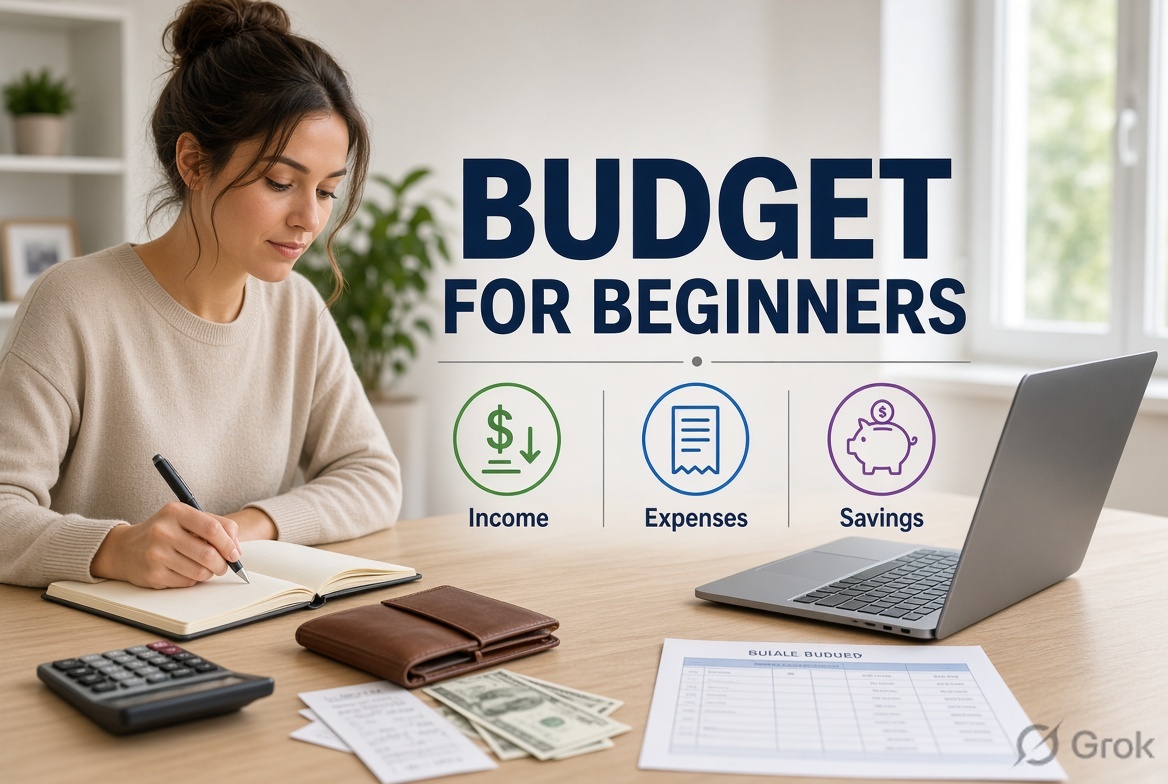
A budget is just a plan for your money. That’s it. You’re deciding ahead of time where your money goes instead of wondering afterward where it went. You can still eat out, buy stuff, take trips — a budget just means those things are on purpose, not accidents.
Once I reframed it that way it got a lot easier to start.
Step One: Figure Out What You Actually Make
This sounds embarrassingly basic but a lot of people — including me — didn’t really know their actual take-home pay. Not gross income. Not what it says on LinkedIn. What actually lands in your checking account every month after taxes, health insurance, and whatever else gets pulled out.
If you get direct deposit, check your last two or three deposits and average them. If your income varies because you freelance or do gig work, look at the last three months and use a conservative estimate. Don’t budget around your best month. Budget around your okay month.
Write that number down. That’s your starting point. Everything else flows from there.
Step Two: Track What You’re Actually Spending — Not What You Think You’re Spending
Here’s where most people go wrong. They sit down to make a budget and they just… guess. “I probably spend around $300 on groceries.” “Maybe $150 on eating out?” And they’re almost always wrong, usually low.
Before you build any kind of budget, spend one week just tracking everything. I mean everything. The $4 coffee. The $12 parking. The random $8 charge you forgot was coming. Don’t judge any of it, just write it down or throw it in a spreadsheet or use an app — whatever you’ll actually use.
At the end of the week, look at the categories. Groceries. Restaurants. Gas. Subscriptions. Entertainment. Personal care. Add them up.
I promise you will be surprised. I thought I spent maybe $200 a month on food outside groceries. It was $480. I almost cried.
But — and this is important — that’s not a reason to feel bad. That’s just information. Now you know. Now you can actually work with reality instead of a made-up version of it.
Step Three: Use a Simple Framework (The 50/30/20 Rule Is a Fine Starting Point)
There are a million budgeting methods out there and people get really evangelical about their favorite ones. I’ve tried a few. Here’s my honest take: the one that works is the one you’ll actually stick with.
For most beginners, the 50/30/20 rule is a solid starting framework. It goes like this:
50% of your take-home goes to needs. Rent or mortgage, utilities, groceries, car payment, insurance, minimum debt payments. The stuff that happens whether you want it to or not.
30% goes to wants. Restaurants, streaming services, hobbies, shopping, the random stuff that makes life not miserable.
20% goes to savings and debt paydown. Emergency fund, retirement contributions, paying extra on debt.
Is this perfect? No. If you live in a high cost-of-living city, your needs might already eat 60-70% of your income and that’s just the reality. The percentages aren’t gospel. They’re a direction.
Use them to see where your actual numbers land and then adjust from there based on what’s actually possible for your situation.
Step Four: Build Your Budget, Category by Category
Okay so now you have your income, your actual spending data, and a rough framework. Time to actually put the thing together.
List out every spending category you have. Then assign a number to each one — not a wish, a realistic target based on what you’ve actually been spending, with some adjustments for where you want to cut back or increase.
Your fixed expenses first. These don’t change much month to month — rent, car payment, insurance, subscriptions. Write down exactly what each one costs.
Then your variable expenses. Groceries, gas, eating out, entertainment. These fluctuate, so give yourself a range or a monthly target that’s realistic but slightly tighter than your current average.
Then savings. And here’s the thing — savings goes in the budget like it’s a bill. Not “whatever’s left over.” Because whatever’s left over has a way of becoming zero.
Add it all up. Compare it to your income. If you’re over, something has to give — and that’s a real conversation you have to have with yourself about what matters. If you’re under, great, put the extra toward savings or debt.
The Part Nobody Talks About: The Budget Will Be Wrong the First Month
It just will be. You’ll forget to budget for your car registration. Your electric bill will spike because of the heat. You’ll have a birthday dinner for someone and blow your restaurant budget in week one.
This is normal. This is not failure. This is just the first draft.
After that first month, you sit down, see what worked and what didn’t, and adjust. Budgeting is not a set-it-and-forget-it thing. It’s more like a recurring check-in with your own life.
Most people I know who successfully budget have a “budget date” with themselves — usually the last few days of the month or the first few days of the new one. You look at how last month went, set numbers for next month, and move on. Takes maybe 20-30 minutes once you’ve got a system.
Also Read : What Is the Best Free Budgeting App?
A Few Things That Actually Helped Me
Sinking funds. This was kind of a game changer. Basically, you take irregular expenses — car maintenance, gifts, annual subscriptions, travel — and divide the yearly cost by 12. Then you set that amount aside every month into a dedicated savings bucket. So when your car needs new tires it’s not an emergency, it’s just money you already set aside. I have a separate savings account with buckets labeled “car stuff,” “gifts,” “travel,” and “random life stuff.” Feels a little over the top but it’s saved me from so many financial mini-crises.
Automating savings first. The classic advice and it’s classic for a reason. Set up a transfer to savings that happens the day after you get paid. Before you’ve had time to spend it on anything. Even if it’s $50 a month. It adds up and more importantly it builds the habit.
Not being too strict. I tried a version of budgeting once where I cut out basically everything fun and gave myself like $20 a month for entertainment. I lasted six weeks and then went completely off the rails and spent three weeks not looking at my account at all. Balance matters. Give yourself permission to spend money on things you enjoy — just do it on purpose.
The Bigger Picture
Budgeting is kind of the foundation everything else in personal finance is built on. You can’t really talk about investing or paying off debt or saving for a house in a meaningful way until you have a handle on where your money is going.
But it doesn’t have to be complicated. You don’t need a fancy app or a spreadsheet with macros or a finance influencer’s 47-step system. You need to know what comes in, know what goes out, have a rough plan, and check in on it regularly.
That’s it. That’s the whole thing.
I’m not going to pretend I have a perfect budget now. There are still months where I look at my “wants” spending and wince a little. But I look. That’s the difference. I actually look now, and I make adjustments, and my financial stress level is genuinely a fraction of what it used to be.
Start messy. The Starbucks parking lot breakdown is optional but apparently very motivating.
Conclusion
Creating a budget as a beginner doesn’t have to be complicated. Start by tracking your income and expenses, separating needs from wants, and setting realistic spending limits. Review your budget regularly and adjust it as your financial situation changes. With consistency and discipline, a simple budget can help you control your spending, build savings, and work toward your financial goals.
How do I start a budget as a beginner?
Start by calculating your monthly income, listing all expenses, and setting spending limits for each category.
What expenses should I include in my budget?
Include rent, groceries, utilities, transportation, bills, subscriptions, entertainment, savings, and debt payments.
How much money should a beginner save each month?
A common starting target is 10–20% of your income, but choose an amount that fits your financial situation.
What is the 50/30/20 budgeting rule?
It suggests using about 50% for needs, 30% for wants, and 20% for savings and debt repayment. It’s a guideline, not a strict rule.
How often should I review my budget?
Review it at least once a month to see where you overspent and make adjustments for the next month.