
I went through a phase of doing incredibly elaborate Sunday meal prep — portioned containers lined up perfectly, three proteins, roasted vegetables, sauces from scratch. Looked great in photos. Burned me out completely within a month.
What Are the Cheapest Meals to Cook at Home?
What I actually do now is simpler, cheaper, and — unlike that first attempt — I’ve actually stuck with it. Here’s the version that works when the goal is saving money without losing your whole weekend.
Why it actually saves real money
The math holds up better than you’d think. Lunch out runs $10-15 in most cities. Coffee, another $5-7. A tired weeknight takeout order, $15-25 a person.
Even swapping just three of those a week for something you prepped saves $45-75 a week — call it $10-15 in ingredients instead. That’s $120-200 a month, $1,400-2,400 a year, just from not defaulting to takeout when you’re tired.
Most people who quit meal prep didn’t quit because it doesn’t work. They quit because their system was way more complicated than it needed to be.
Prep components, not full meals
Here’s the shift that made it actually stick for me — stop making complete meals in advance and start prepping pieces that mix and match through the week.
Full meals prepped ahead means eating the exact same thing three days straight, and by Wednesday you’re bored enough to order delivery, and the whole system falls apart.
Components mean the fridge is full of building blocks you combine differently every day, so it never feels repetitive even though the prep work was identical.
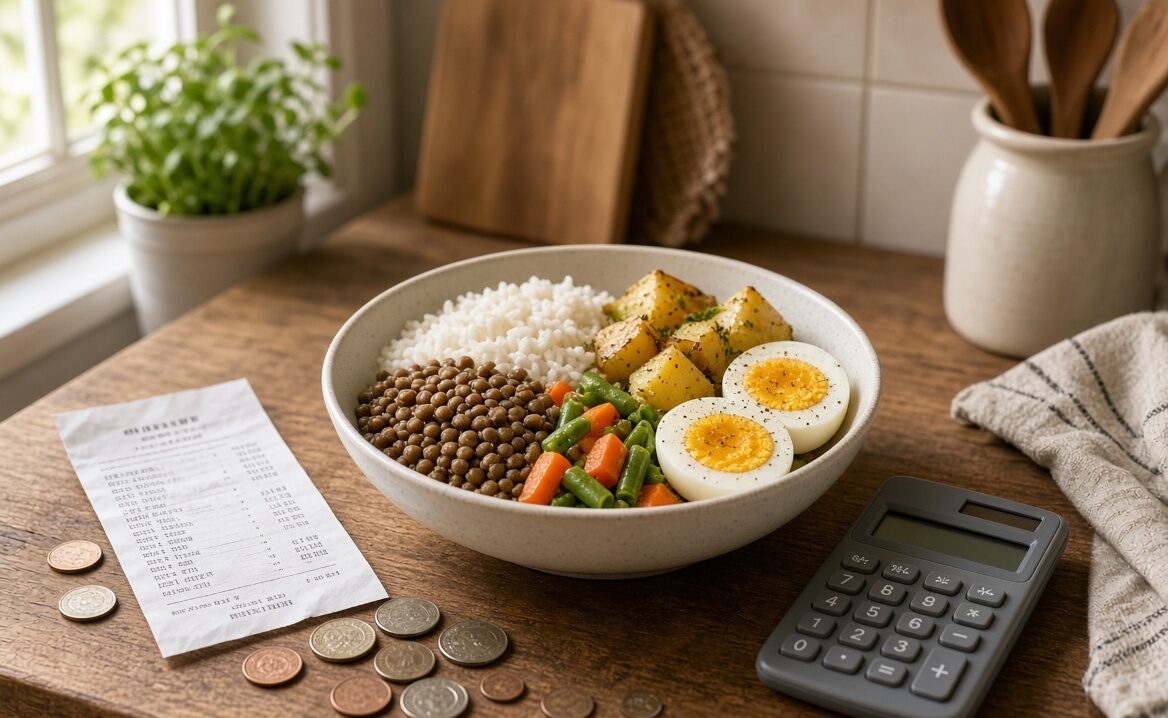
A typical Sunday session: a big pot of grains, a pot of beans or lentils, roasted vegetables (whatever was cheapest that week), a protein (hard-boiled eggs, baked chicken thighs, ground meat), a couple of sauces. From five components you can build a different bowl or wrap every single day.
Planning it out
Check the sales first, plan meals second. Most people decide what they want to eat, then buy for it — flip that. Look at your grocery store’s weekly ad before deciding anything. Whatever’s cheapest that week is what you’re cooking. Chicken thighs at $1.49/lb? Chicken’s your protein. Sweet potatoes on sale? That’s your vegetable.
Two proteins, two starches, two vegetables. That’s plenty of variety without overcomplicating things. Proteins: chicken thighs, ground beef or turkey, eggs, beans, canned tuna. Starches: rice, pasta, quinoa, potatoes. Vegetables: whatever’s cheap that week. Some weeks you won’t use all six — one protein and two vegetables is fine too.
Write the list, stick to it. This is where most budgets die — wandering the aisles and tossing in things that “seem like a good idea” and then rot in the crisper drawer. Write it before you leave the house, buy only what’s on it.
Prep in a logical order. Beans or lentils first since they take longest, grains going on another burner, proteins marinating while you chop vegetables, roast while proteins cook. A whole week’s worth in about two to two and a half hours if you’ve got two burners and the oven going at once.
Staples worth buying in bulk
A 10-pound bag of rice from a warehouse store or Asian grocery is dramatically cheaper per pound than the small bag at a regular store, and it keeps for years airtight.
Dried beans over canned, always, if you have the planning ahead to soak them — a couple pounds lasts weeks for a few dollars.
Oats — a big container is usually under $5 and lasts months.
Frozen vegetables — a two-pound bag runs $2-3 with zero waste, versus fresh that wilts by day four.
Spices, bought from bulk bins at co-ops or ethnic grocery stores, run a fraction of what the little name-brand jars cost for the exact same product.
A real sample week — around $35-40 for five days
Shopping list: 3 lbs bone-in chicken thighs (~$4.50), 1 lb dried black beans (~$1.50), a 5-lb bag of rice (~$4), a head of cabbage (~$2), a bag of frozen broccoli (~$2.50), a dozen eggs (~$3.50), two cans of crushed tomatoes (~$2), onions/garlic/lime/cilantro (~$4), pantry spices you likely already have.
Sunday, about two hours: cook the beans with onion and cumin, cook a big pot of rice, bake and shred the chicken, quick-pickle the cabbage with lime and salt, roast the broccoli with garlic, boil six eggs.
Monday — chicken rice bowl with broccoli and beans. Tuesday — black bean tacos with cabbage slaw. Wednesday — egg fried rice with broccoli. Thursday — chicken burrito bowl. Friday — bean and egg scramble, or a quick bean soup with the leftover tomatoes.
Same prep session, five different dinners, under $4 a meal counting two meals a day out of it.
Keeping it from getting boring
Change the sauce, not the meal. The same chicken and rice becomes a different dish entirely with salsa verde instead of soy sauce.
Change the format — Wednesday’s leftover rice and beans becomes a wrap Thursday instead of a bowl again.
Don’t prep every single meal — leave a night or two open for something fresh or for using up odds and ends. Prep for 4-5 meals, not all 21.
The mistakes to skip
Prepping too much your first week — start with just lunches, add dinners once it’s a habit.
Storing things wrong — airtight glass containers hold up better than plastic bags, and you can actually see what’s in there.
Prepping things that don’t reheat well — dressed salads go soggy, cut avocado browns, fried food loses its crunch. Stick to grains, beans, roasted vegetables, and braised or baked proteins.
Not doing the quick weekday assembly — the Sunday session is only half the system. Containers need to be visible and ready to grab on a Tuesday when you’re exhausted.
It’s not a lifestyle overhaul. It’s two hours on a Sunday buying you an easier week. Start small, stay consistent, and adjust once you know what you actually eat versus what you planned to.
Conclusion
In conclusion, cooking affordable meals at home is a great way to save money without sacrificing taste or nutrition. Simple ingredients like rice, beans, lentils, pasta, potatoes, and seasonal vegetables can be combined to create filling and delicious meals. With proper meal planning, smart shopping, and creative use of leftovers, you can enjoy satisfying homemade food while keeping your grocery budget low.
What are the cheapest meals to cook at home?
Some of the most affordable options include rice and beans, lentil curry, vegetable pasta, egg fried rice, potato dishes, soups, and homemade sandwiches.
What ingredients are best for cheap meals?
Budget-friendly staples include rice, lentils, beans, potatoes, pasta, oats, eggs, seasonal vegetables, and canned tomatoes.
How can I make homemade meals even cheaper?
Plan your meals, buy ingredients in bulk when practical, choose seasonal produce, compare prices, and use leftovers in new meals.
Can cheap meals also be healthy?
Yes. Combining affordable staples with vegetables and protein sources such as beans, lentils, or eggs can create nutritious and filling meals.
Is cooking at home cheaper than ordering takeout?
In most cases, yes. Cooking at home generally costs less per serving, particularly when you prepare multiple portions and use inexpensive ingredients.