
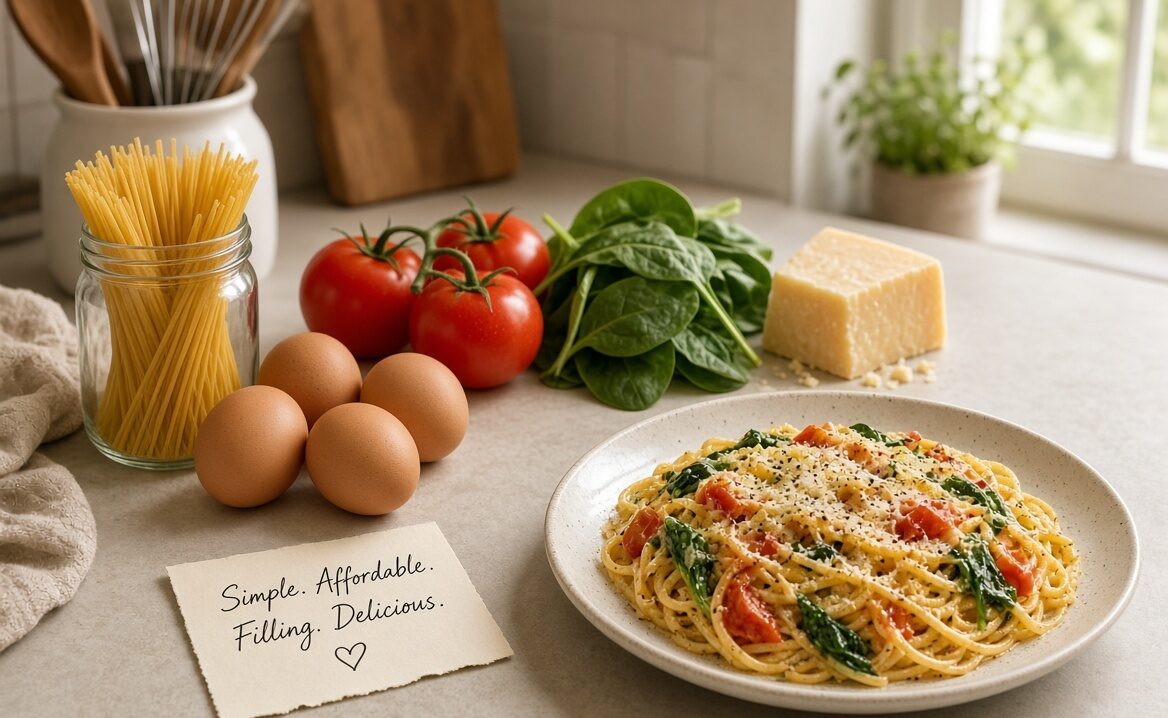
Okay, real talk — there was a Tuesday night last February when I opened my fridge, stared into it for a solid three minutes like it was gonna magically restock itself, and counted exactly five things I had to work with. A dozen eggs. Some garlic. Olive oil. Canned tomatoes. And a box of pasta that had been sitting in my cabinet since probably October.
What can I cook with only five ingredients?
That was it. No fancy sauces, no fresh herbs, no pre-marinated chicken breast. Just those five sad little ingredients and a hunger that was very much not willing to wait for a DoorDash delivery.
So I cooked. And honestly? It was one of the better meals I’ve had in months.
I don’t know why we’ve convinced ourselves that cooking has to be complicated. Every recipe blog out there has you running to three different stores for ingredients you’ll use once and then forget about forever. Half a cup of fish sauce. One teaspoon of sumac. A “small bunch” of tarragon, whatever that means. It’s exhausting. And it’s completely unnecessary.
Some of the best food in the world comes from people who had almost nothing. Italian grandmothers feeding eight people on scraps. Mexican street vendors turning corn and lime and salt into something you’d pay twenty dollars for at a restaurant downtown. The whole premise of French country cooking is basically “take cheap stuff and make it taste expensive.” Five ingredients isn’t a limitation. It’s almost a creative advantage.
Here’s what I’ve figured out after years of broke cooking, lazy cooking, and cooking at 11pm when I genuinely cannot be bothered:
The Five-Ingredient Mindset
Before we get into actual dishes, you have to shift how you think about this. Most people panic when they open the fridge and don’t see “enough.” Enough for what, exactly? Enough to recreate a restaurant meal? Yeah, probably not. Enough to eat something warm and satisfying that you made yourself in under thirty minutes? Almost certainly yes.
The trick is having a few solid anchor ingredients. Eggs are the most obvious one — eggs can become breakfast, lunch, dinner, or a snack depending on how you cook them. Same with pasta. Same with potatoes. These are your foundation ingredients, the ones that take on whatever you throw at them.
Garlic is non-negotiable in my kitchen. I know that sounds dramatic but I genuinely believe garlic makes everything taste like you tried. It’s cheap, it lasts forever, and just the smell of it hitting a hot pan makes the whole apartment feel like someone’s actually cooking. That’s not nothing.
Fat matters too. Butter or olive oil, pick your allegiance, but you need one of them. Fat is what carries flavor. Fat is why restaurant food tastes better than home cooking — they’re not holding back on it and neither should you.
And then acid. A squeeze of lemon, a splash of vinegar, even just a can of tomatoes. Acid brightens everything and makes flavors pop in a way that more salt can’t fix.
Work with those building blocks and five ingredients feels like plenty.
What You Can Actually Make
Aglio e Olio — This is the pasta dish I made that February night, and I’m not exaggerating when I say it’s changed how I think about weeknight cooking. Pasta, olive oil, garlic, red pepper flakes, and parmesan if you have it. That’s it. You cook the garlic low and slow in a lot of olive oil until it’s just barely golden and smells incredible, toss your cooked pasta in it, splash in a little pasta water, and watch it become this glossy, silky thing that tastes like it came from a real Italian restaurant. The whole thing takes maybe twenty minutes. It costs almost nothing. I’ve made it probably forty times since then.
Shakshuka — Eggs poached directly in a spiced tomato sauce. The five you need: olive oil, garlic, canned tomatoes, eggs, and cumin (or whatever spice you have). You sauté the garlic, dump in the tomatoes, season it, let it simmer down until it thickens, then crack your eggs right into the sauce and cover it until the whites set. Eat it straight out of the pan with whatever bread you have around. It sounds fancier than it is. It’s genuinely a fifteen-minute meal.
Potato Frittata — Eggs again, because eggs are the greatest ingredient ever invented. Slice potatoes thin, cook them in olive oil with garlic until they’re tender, pour beaten eggs over everything, and finish it under the broiler for a couple minutes. Season aggressively with salt and pepper. The result is this thick, custardy thing that’s good hot, good cold, good the next morning, good at any temperature at any time of day.
One-Pan Chicken Thighs with Garlic — If you happen to have chicken thighs, this is almost embarrassingly easy. Chicken thighs, olive oil, garlic, lemon, salt. Sear the thighs skin-side down in a hot oven-safe pan until the skin is crispy and golden — don’t rush this, give it eight minutes minimum — then flip, throw in a whole head of garlic cut in half, squeeze lemon over everything, and roast at 425 for another twenty minutes. The garlic gets soft and almost sweet and you can squeeze it out like butter onto the chicken. It looks impressive. It’s four ingredients and maybe five dollars a serving.
Bean and Egg Scramble — Sounds boring, tastes weirdly good. Canned white beans, eggs, olive oil, garlic, and whatever herb you have dried. Cook the garlic in oil, add the beans and smash some of them so you get this creamy-chunky situation, pour in beaten eggs and scramble everything together. Season with salt. It’s high protein, it’s filling, it costs maybe two dollars, and it comes together in eight minutes. I ate this for lunch three times last month.
The Part Nobody Talks About
There’s something that happens when you cook with constraints that doesn’t happen when you have unlimited options. You actually taste things. You adjust. You learn what garlic does when it burns versus when it’s perfectly golden. You figure out that pasta water is genuinely magic and not just something food bloggers say. You develop an instinct for salt.
When you’re working with five ingredients, you can’t hide behind complexity. You have to get those five things right. And getting five things right is actually way more achievable than getting twenty things right.
I’ve eaten at some genuinely nice restaurants — the kind with the small portions and the big prices and the server who describes every component of your dish like a book report. And sometimes those meals are extraordinary. But sometimes I come home from one of those and make myself a bowl of aglio e olio at midnight and think: yeah, this is just as good. Maybe better, because I made it.
A Few Rules That Actually Help
Salt your pasta water until it tastes like the ocean. I know you’ve heard this before. Do it anyway. It makes an actual difference and you cannot season pasta after the fact the same way.
Don’t crowd your pan. This is why things steam instead of brown. Browning is flavor. Give your food space.
Taste constantly. This is the thing cooking classes drill into you and it’s annoying how correct it is. Taste before you add more seasoning. Taste before you decide it needs something. Taste when you think it’s done.
Let your pan get hot before you add anything. A cold pan is why chicken skin isn’t crispy and why garlic turns pale and greasy instead of golden and fragrant.
And honestly? Don’t stress it. The goal on a Tuesday night when you have five ingredients is not a perfect meal. It’s a good meal. Something warm that you made yourself that tastes like effort even when it wasn’t that much effort. That is completely achievable with five things.
I’m not trying to make this into some wholesome lesson about simplicity or whatever. I just think we’ve overcomplicated cooking in a way that makes people feel like they can’t do it unless they have a fully stocked kitchen and a free Sunday afternoon. You can do it on a Wednesday at 7pm with whatever five things are in your fridge.
You’ve probably been able to do it for years. You just didn’t know it yet.
Conclusion
In conclusion, cooking with only five ingredients can be simple, affordable, and delicious. By choosing versatile ingredients and using basic seasonings and cooking methods, you can prepare a variety of satisfying meals without a long shopping list. With a little creativity, five ingredients are often all you need to make a tasty homemade meal.
How can I make five-ingredient meals more flavorful?
Use flavorful ingredients such as garlic, herbs, cheese, sauces, or spices. Simple cooking techniques like roasting, grilling, and sautéing can also add plenty of flavor.
Do seasonings count as ingredients?
It depends on the recipe. Many five-ingredient recipes treat basic seasonings such as salt, pepper, and common spices as pantry staples rather than counted ingredients.
What are the best ingredients for five-ingredient recipes?
Versatile staples like eggs, chicken, rice, pasta, beans, potatoes, canned tomatoes, and seasonal vegetables work well in many recipes.
Can five-ingredient meals be healthy?
Yes. Choose a balance of protein, vegetables, whole grains, and healthy fats to create a nutritious meal with minimal ingredients.
What can I cook with only five ingredients?
You can make simple meals such as pasta dishes, rice bowls, omelets, tacos, sandwiches, soups, and roasted chicken with just five main ingredients.